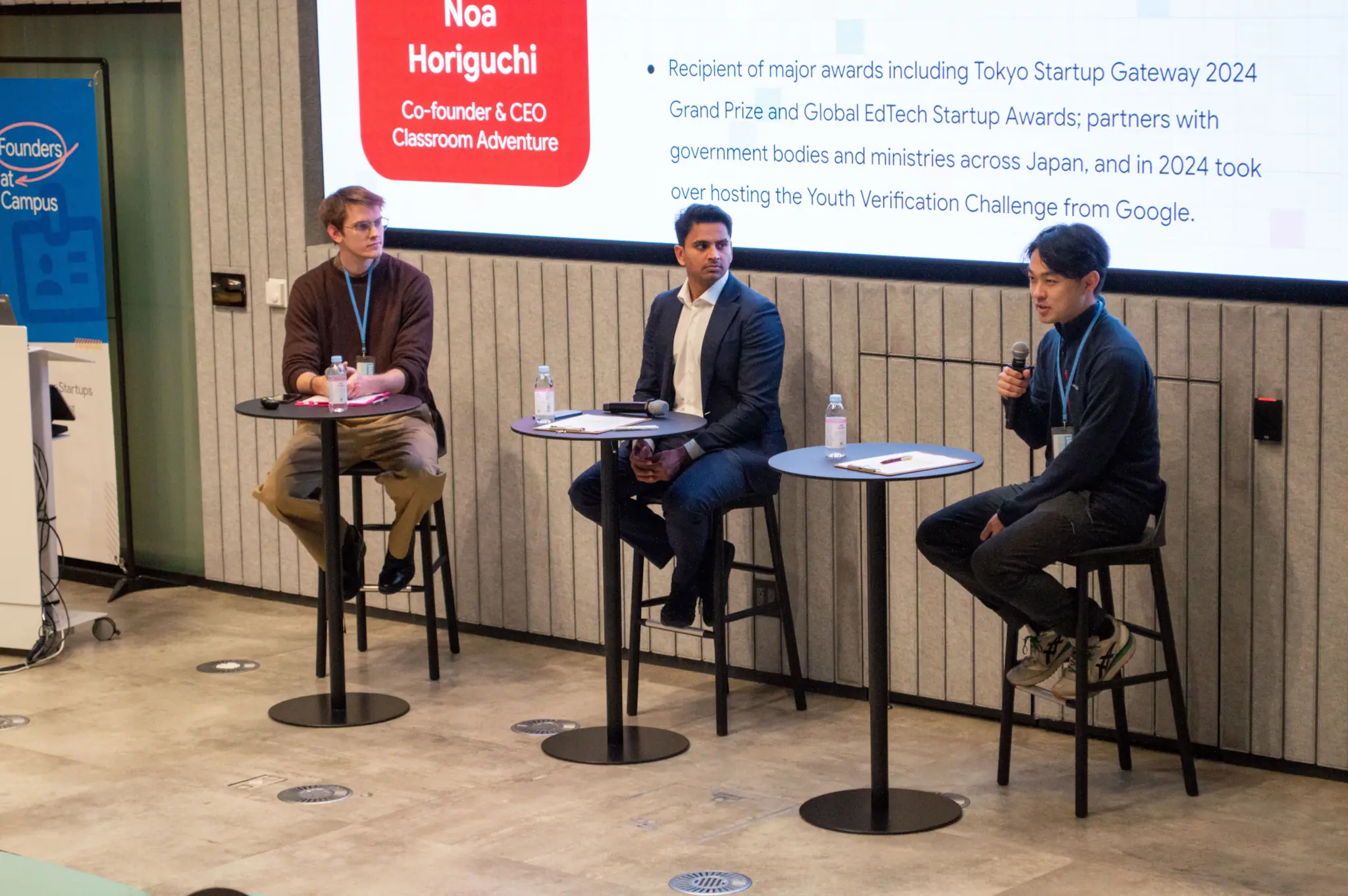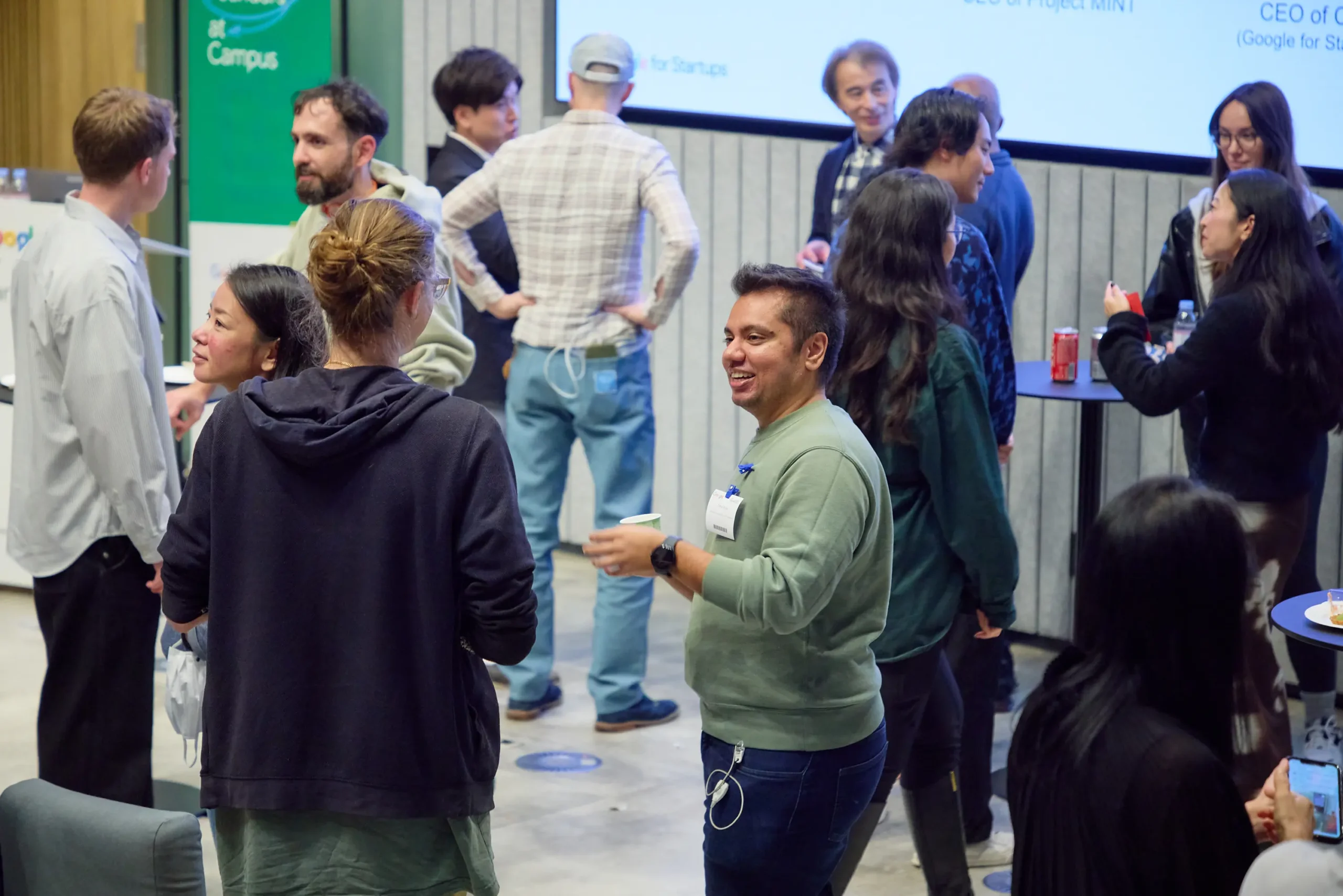
What does it actually take to build a sustainable business? Not just one that sounds good, but one that survives, scales, and creates lasting impact? That was the central question at the second installment of Changemakers Unplugged, held at Google for Startups Campus Tokyo. Changemakers Unplugged is an event series exploring how founders and ecosystem partners are tackling some of society’s most pressing challenges, through honest conversation, real stories, and a commitment to building what matters. The panel brought together Eriko Suzuki, Partner at Dears CAPITAL and CEO of Kind Capital, and Emi Yamakita, CFO & CAO of Shin Mirai, a forestry-sector startup pursuing an IPO. The conversation was moderated by Impact HUB Tokyo CEO Yuko Mishio, who guided the discussion across three themes: shifting values, capital circulation, and strategy in complexity. Here are the key takeaways.
Beyond the Buzz: Sustainability After the Hype Cycle
The panel was candid about where the sustainability conversation stands today. The global peak of attention around SDGs and ESG has passed, and political headwinds, particularly in the US, have cooled mainstream enthusiasm. But the panelists argued this is actually a clarifying moment. The organizations that were riding a trend have moved on; what remains are the ones committed to solving real problems. Eriko suggested the conversation needs to move beyond sustainability (reducing harm to zero, but maintaining status quo) toward regenerative thinking: actively improving the systems and structures we operate in. Emi added that a new generation of “SDGs natives” who grew up with these values as baseline assumptions are entering the workforce (a hopeful trend!) and businesses need to take that shift seriously.
Why Capital Isn’t Flowing Where It Should
Japan has capital. The problem, the panelists argued, is that it’s not reaching the entrepreneurs who need it most. Post-bubble caution has made Japanese financial institutions deeply risk-averse, with a strong bias toward businesses that can demonstrate profitability within three years. That makes life very difficult for early-stage founders working on long-horizon, mission-driven ventures. Eriko pointed out that Japan lacks the “first penguin” investors willing to take early bets, partly because VCs themselves raise from conservative institutional backers. The absence of a strong family office culture — a major source of risk capital in Europe and the US — compounds the gap. Emi offered a practical counterpoint: regional owner-operated companies, rather than traditional financial institutions, may be better positioned to evaluate and support ventures using a different set of criteria. The panel also highlighted the potential of blended finance — combining grants, loans, donation-based investment, and VC funding — as a more realistic capital strategy for impact-driven startups.
Passion First, Spreadsheets Second
One of the sharpest insights came around how early-stage ventures are actually evaluated. At the seed stage, Eriko was emphatic: the size of the founder’s vision and their conviction matter far more than short-term KPIs. Investors at this stage are betting on people, not projections. Emi echoed this with a story from her own company: their CEO was backed by an investor who saw not just a set of numbers, but a mission driven founder who clearly wasn’t going to stop. The advice to founders in the room was direct: don’t shrink your dream to fit a spreadsheet. Keep the financial plan, but lead with the mission.
Growth as a Tool for Systemic Change
Emi shared a compelling framing of why Shin Mirai is pursuing an IPO. It’s not primarily about fundraising, but also for the purpose of raising the social standing of forestry workers. By growing the company’s valuation, they aim to create a benchmark that attracts talent to an industry that has long struggled with low wages and a labor shortage. Growth, in this case, is a lever for structural change. Eriko recommended impact reports as a practical tool for making long-term value visible and keeping the business accountable to its mission over time. This event made clear that the era of sustainability as a branding exercise is over. What’s emerging in its place is a harder, more honest conversation, about where capital actually flows, what investors really look for, and how growth can serve a purpose beyond the balance sheet.
Changemakers Unplugged is an event series by Impact HUB Tokyo exploring how founders and ecosystem partners are tackling some of society’s most pressing challenges, through honest conversation, real stories, and a commitment to building what matters.